
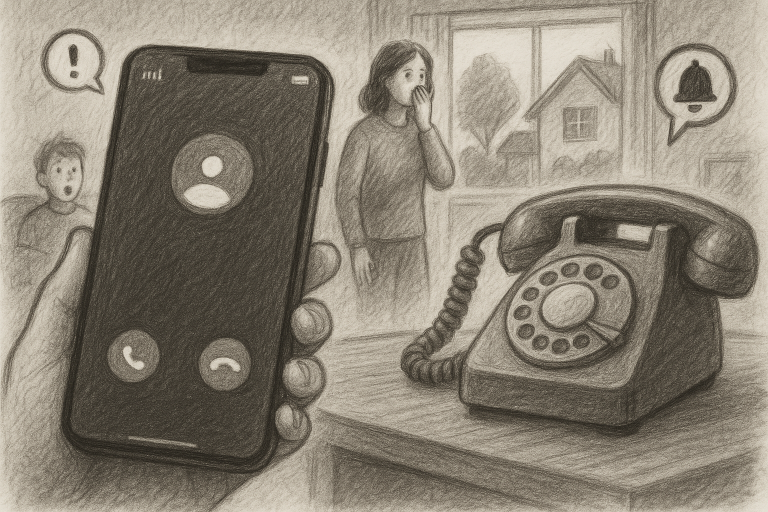
Remember the days when a ringing landline was the sound of a lively home? We’d sprint from room to room, racing our siblings to the receiver, tripping over cords along the way. Fast forward to today, and while our loyalty to smartphones has grown, homeowners everywhere are revisiting a modern twist on an old favorite: digital landline service. But amidst the nostalgia and tech talk, a question still lingers—should you stick with your traditional landline or leap into the digital age? At landlinecellular.com, we’re here to draw the line—data-driven, of course—so you don’t have to.
Tip 1: Compare Costs with Clarity
Let’s face it—attachment to an old landline isn’t cheap. The average cost of a traditional landline in the U.S. hovers around $40 per month, and that’s assuming minimal features. On the flip side, most digital landline service plans cost between $10 and $25 per month, depending on your package. That’s up to a 50% reduction in your home phone bill, all while gaining extra features like voicemail-to-email and call forwarding.
Data Insight: A 2023 survey by Pew Research indicated that homeowners who switched to digital landlines saved an average of $240 annually—money they redirected into home improvements, streaming subscriptions, or a rainy-day fund.
Tip 2: Examine Call Quality with Modern Ears
There’s a myth that traditional landlines offer superior call clarity. But did you know most long-distance traditional calls are already transmitted over digital networks once they leave your neighborhood? With digital landline service, your entire call—start to finish—rides on high-definition VoIP lines, meaning fewer dropped calls, crisper audio, and less “can you hear me now?” moments.
Fun Fact: Independent tests by Telecompaper found that modern VoIP provided a 23% increase in audible clarity compared to copper-based landline calls. If you’re having family game nights or Zoom-style conference calls from your home line, the difference is noticeable.
Tip 3: Evaluate Emergencies and Reliability
Power outages are prime-time for evaluating your home phone’s reliability. Traditionalists argue that analog phones work even during a blackout. True—but with advances in digital landline service, newer devices come with built-in backup power options or battery bases. And many support 911 location services with precise GPS tagging—not just a street address.
Hot Take: FEMA recommends maintaining emergency communication tools with redundancy. Having a digital landline paired with backup internet (or even LTE home routers) gives you stability without sacrificing modern functionality.
Tip 4: Consider Features That Fit Your Lifestyle
Modern homeowners don’t just want dial tones—they want smart integrations. Digital landlines often include call routing, smartphone syncing, robocall screening, and cloud call logs. Traditional landlines? You’re lucky if they still support caller ID without an extra fee.
Feature Breakdown:
- Voicemail-to-Email: Included with digital, absent on analog
- Call Blocking: On-demand with digital, hardware-dependent with analog
- Number Portability: Supported by both, but faster with digital
- Third-Party Integration: Available with digital only (think Google Home, Alexa)
Simply put, digital landline service meets the demands of a smart home, while old-school connections fall short.
Tip 5: Think Installation and Portability
One of the most overlooked advantages of digital landlines? You can set it up yourself. No tangled wires or technician appointments required. Within 15 minutes, you can have a fully functioning home phone that works over your existing internet connection.
Digital Wins: Heading to your summer home or downsizing? Just unplug the terminal, take it with you, and plug it into any compatible internet. Try doing that with a traditional landline pinned to the wall!
Tip 6: Don’t Forget the Environment
Digital services are greener. By ditching physical phone lines and outdated hardware, you reduce your carbon footprint. Since most digital landline devices use cloud-based storage and updates, fewer electronics end up in landfills.
Data Nugget: According to the Green Electronics Council, switching from analog to digital phone systems can reduce a household’s telecom-related electronic waste by up to 60% over 5 years.
Tip 7: Assess Security and Privacy
Concerned about eavesdropping? With end-to-end encryption becoming standard in digital landline service platforms, you get better security than your classic landline has ever offered. Systems at landlinecellular.com offer enterprise-level encryption with home-level simplicity.
Bonus: You can even monitor call activity remotely and block unwanted numbers before the phone even rings—a dream feature for those dodging telemarketers or managing elder care.
Tip 8: Check for Compatibility with Medical Devices
If your home has medical alert systems, it’s critical to know which phone network supports them. Fortunately, most digital landline providers—including those at landlinecellular.com—offer full compatibility with modern alert devices. Just confirm during the setup process, and you’re good to go.
Traditional phone lines have also supported these systems, but with service providers phasing out analog lines nationwide, digital becomes the better long-term bet.
Tip 9: Plan for the Future
Did you know? Over 60% of U.S. households have already moved away from copper landlines, according to the FCC. Telecommunications infrastructure is rapidly modernizing. That means analog phone lines may cost more, offer declining service, or even face full discontinuation in certain regions. Choosing a digital landline service now is not just a smart option—it’s a future-proof one.
Pro Insight: Providers like landlinecellular.com routinely update software, ensure compatibility with evolving platforms, and offer flexible devices to keep your home in sync with tomorrow.
Tip 10: Don’t Go It Alone—Choose Experts
Transitioning to a modern phone system doesn’t mean navigating technical jargon alone. At landlinecellular.com, we specialize in helping homeowners make the switch smoothly, affordably, and confidently. Whether you’re tech-savvy or tech-shy, we walk you through every step—from choosing the right hardware to activating smart features you’ll actually use.
Call to Action: Curious how it all works? Contact us for a demo and see how a digital landline service can amplify your home’s communications while simplifying your setup.
The Bottom Line: Your home deserves a phone system that does more than just ring. It should adapt, protect, and evolve with you. Traditional landlines had their era—but in today’s digital-first households, the clear winner is modern, mobile, and unmistakably digital.